Create projects and solutions
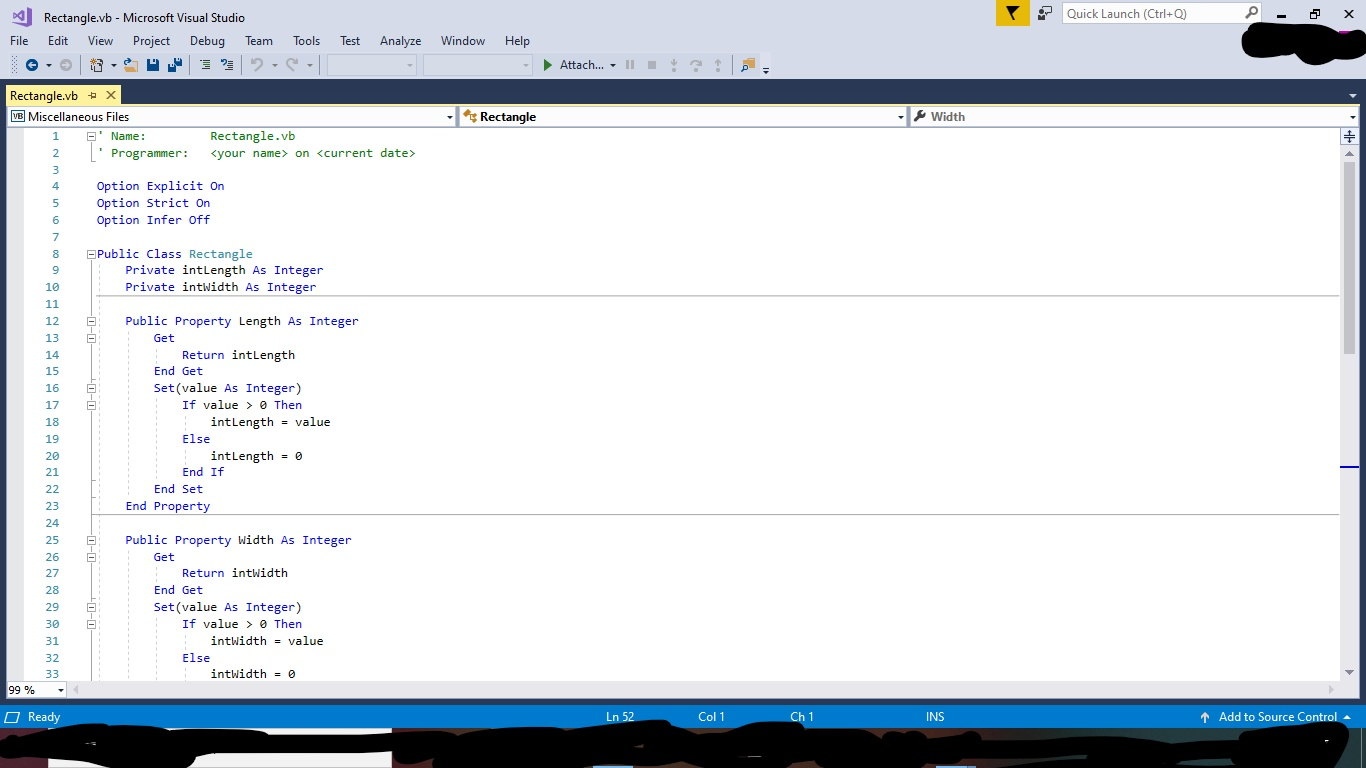
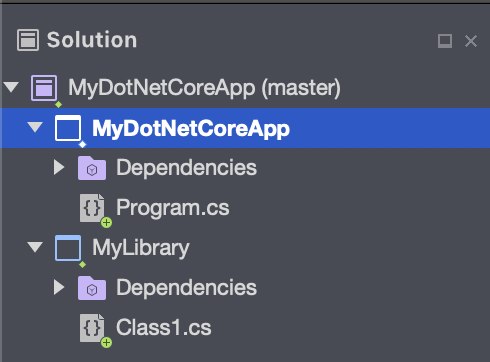
You can create a new project in a new solution using File | New... or add a new project to the existing solution by right-clicking the solution or solution folder node in the Solution Explorer, and choosing Add | New Project.
When creating a new solution or project, Rider gives you a number of pre-installed templates, which are grouped by frameworks. There are templates to create an empty project, standard .NET class libraries and applications, as well as test projects. It will also create .NET Core projects, as console applications, testing and class libraries.
- The filenames as EASYLABEL.SLN, EASYLABEL.VBPROJ and EASYLABEL.USER. So when I did this and tried to open the Solution it didn't open it and showed the follwoing error/warning message: 'Unable to read the project file 'LABELMAKER.VBPROJ'. The system can't find the file specified' It's obvious that it's still expecting the old filename even.
- This extension is for those times where you have a project open in Visual Studio and you want to be able to quickly open it in Visual Studio Code. In order to use this extension, you must have Visual Studio 2015 as well as Visual Studio Code installed.
The VB.NET language is used to create applications based on.NET, such as web applications and XML web services. '.NET' was eventually dropped by Microsoft in 2005 and the VB file is now used by Microsoft Visual Studio. NOTE: VB files can also be used to contain viruses or other malware. Therefore, do not open VB files if they are an unknown e.
The list of project templates is searchable.
In every template, you can specify a number of options:
Solution/project name and folder
An option to create a Git or Mercurial repository
Language to use — many templates support C#, VB.NET and/or F#
Target framework for the project. Note that for a framework to be available from this list, it has to be installed on your system.
For Unity and Xamarin, several other options can be provided as well, for example the path to UnityEngine.dll, the target platform (Android or iOS), the type of app (blank, Android Wear, ...) Note that these options, too, depend on available frameworks on your system, such as the Mono/Android versions installed.
When you have specified the project options, just click Create. Once a project has been created, files can be added or removed by right-clicking on the project node in the Solution Explorer.
Open existing projects and solutions
To open an existing project or solution, choose the corresponding item on the welcome screen. Existing solutions are listed in the left pane. You can search the list in case you have a lot of solutions — just start typing the solution name and a search field will appear.
If Rider is already running, press Ctrl+Shift+O or choose File | Open | Open... from the menu. When opening a project, Rider will generate an .sln file if necessary.
In the dialog that appears, you can choose either a solution file (.sln ), a project file (for example, .csproj) — in this case Rider will generate an .sln file if necessary, or you can just select a folder — in this case, you will be able to choose any of the solution files located in the selected folder or in any of its subfolders.
If your solution is directory-based, that is all its projects are arranged in subfolders without the .sln file, you can choose the root folder in the Select Path dialog to open all projects from subfolders, for example:
Note that whenever you choose a folder in the Select Path dialog, you can always opt for opening it as a folder (as opposed to a .NET project). In this case you will be able to browse all files in this folder but code analysis and other features will not be available in .NET files (*.cs, *.vb, and so on).
You can choose any of the recently opened solutions from the list under File | Open.
Rider also allows opening a project from source control. It can, for example, log in to GitHub, and clone a repo to the local file system. Once done, it will prompt you to choose a solution to open from those available in the repo.
When opening a .NET Core project, Rider will automatically restore all packages and will also detect the list of target frameworks from, and display them in a chooser in the status bar. Selecting the current target framework sets the context for the editor — what compiler defines are active, and what packages and assemblies are referenced.
Rider allows opening several solutions simultaneously in different windows. By default, each time you open a solution while another one is opened, it prompts you to choose whether to open the project in the same window or in a new window. If necessary, you can set the default way of opening projects on the Appearance & Behavior | System Settings page of JetBrains Rider settings Ctrl+Alt+S.
Trusted and untrusted solutions
Each MSBuild project in your solution contains an MSBuild script that is executed not only when you build the project, but also when you merely open the solution.
This happens because the IDE runs MSBuild on the project script to understand the structure of the project and its dependencies, and without this understanding the IDE would be nothing more than a basic text editor.
Malicious actors can use this design to base an attack on modified project scripts.
To address this security threat, JetBrains Rider relies on the concept of trusted solutions and trusted locations.
By default, each solution you open is considered untrusted and you will see a dialog where you can either make this solution trusted and open it or choose not open it. Once a solution was opened, it becomes trusted and you will not be asked for confirmation when you open it again.
You can also configure a list of directories where you keep your solutions to make all of them trusted. This list is configurable on the Build, Execution, Deployment | Trusted Locations page of JetBrains Rider settings Ctrl+Alt+S.
Install custom project templates
Rider supports the template system used by the .NET tooling dotnet new, which allows you to use project templates from the dotnet templates gallery as well as custom templates that you can create on your own.
There are two ways to install new project templates.
You can run
dotnet new --install [template package]in the command line, where[template package]is the template id from the dotnet templates gallery.In the New Project/ New Solution dialog, click More Templates on the left, then click Install Template, and then choose a folder or a package file with the custom project template.
When the path to the template appears in the list, click Reload.
Create custom project template
Create a project with the desired structure. You can take any project as a starting point or create a new one using any of the existing templates.
To illustrate this, we take the simplest project that contains just one file.
ConsoleAppAsyncMain ├── bin ├── obj ├── MyProject.csproj ├── Program.csProgram.cs contains
async mainmethod as the default application entry point:using System;using System.Threading.Tasks;namespace MyProject{ class Program { static async Task Main(string[] args) { Console.WriteLine('Hello World!'); } }}Copy the project folder to a location from which you will use it as a template.
Remove bin, obj, and any other directories and fies that are not related to the source code of the template.
In the copied project directory (which is now the template directory), add a folder named .template.config and a file named template.json inside it.
Now the template structure should look as follows:
MyTemplates ├── ConsoleAppAsyncMain ├── .template.config ├── template.json ├── MyProject.csproj ├── Program.csSpecify template properties in the template descriptor template.json
The minimal descriptor can look as shown below, but you can provide a much more detailed configuration if necessary. You can find more information and examples in this Microsoft .NET Blog article.
{ 'author': 'Your Name', 'name': 'Async Main Console Application', 'description': 'A project for creating a command-line application that can run on .NET Core on Windows, Linux and macOS, and has an async Main method.', 'identity': 'YourName.ConsoleApp.1.0', 'shortName': 'consoleasync', 'tags': { 'language': 'C#', 'type': 'project' }, 'sourceName': 'MyProject', 'symbols': { 'Framework': { 'type': 'parameter', 'description': 'The target framework for the project.', 'datatype': 'choice', 'choices': [ { 'choice': 'netcoreapp2.0' }, { 'choice': 'netcoreapp3.0' } ], 'defaultValue': 'netcoreapp2.0' } }}Properties in the above configuration are self-explanatory, except
'sourceName': 'MyProject'.
When you create projects using this template, the value of this property will be replaced everywhere with the name you specify for the new project.In our example, the new name will replace the project file name and the namespace in Program.cs.
Your new project template is ready, you can install it in the New Project/ New Solution dialog — click More Templates on the left, then click Install Template, and then choose the ConsoleAppAsyncMain folder wherever you saved it.
When the path to the template appears in the list, click Reload.As soon as the template is installed, you can find it in the list on the left and use it to create new projects:
Manage recent solutions
Each time you open a new solution, Rider saves it in its history and lets you quickly reopen it from the File | Open menu. If you want to remove a solution from your history, choose File | Open | Manage Projects... from the main menu, select a solution using the Up and Down keys, and then press Delete when it is selected.
4 file types use the .vb file extension.- 1.Visual Basic Project Item File
- 2.Grand Theft Auto Audio File
- 3.Virtual Boy ROM File
- 4.Beam Games SIFF Video
File Type 1Visual Basic Project Item File
| Developer | Microsoft |
| Popularity | |
| Category | Developer Files |
| Format | Text |
What is a VB file?
A VB file is a project item file written in the Visual Basic language, an object-oriented programming language created by Microsoft for use with the .NET Framework. It contains Visual Basic instructions in ASCII text format.
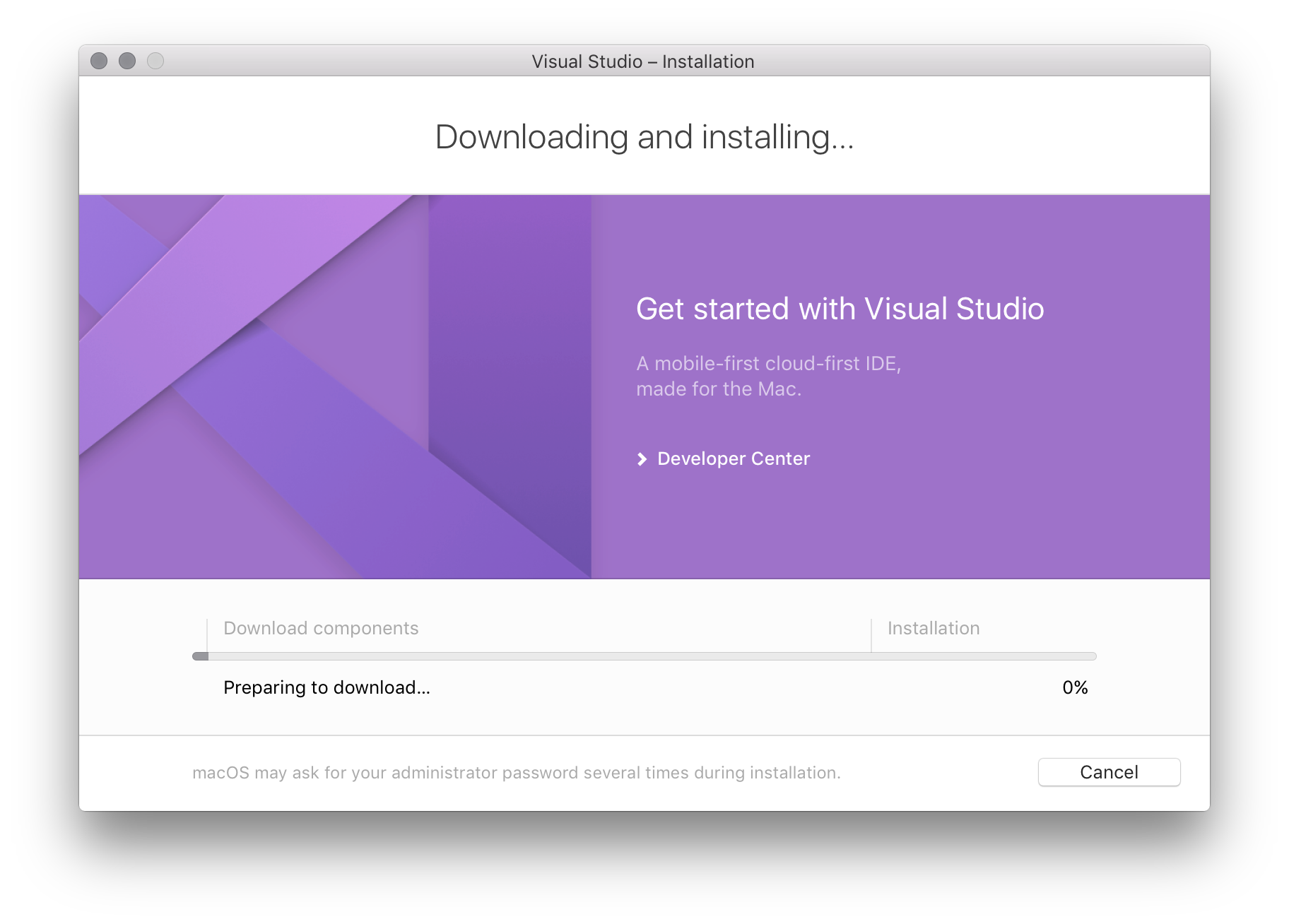
A project item can refer to a variety of Visual Basic project components. Each available project item differs based on whether you are working in a local or web project. Examples of project items include a Windows form, Login form, splash screen, dialog, class, interface, code file, custom control, web custom control, or installer class. The 'vb' extension is used for all of these items.
Visual Basic is a programming language implemented on the .NET framework. Visual Basic .NET (VB.NET) was released in 2002 to replace the original Visual Basic language. The VB.NET language is used to create applications based on .NET, such as web applications and XML web services. '.NET' was eventually dropped by Microsoft in 2005 and the VB file is now used by Microsoft Visual Studio.
NOTE: VB files can also be used to contain viruses or other malware. Therefore, do not open VB files if they are an unknown e-mail attachments.
Open and view .VB files with File Viewer Plus.Programs that open VB files
Open Sln In Vs Code
File Type 2Grand Theft Auto Audio File

| Developer | Rockstar Games |
| Popularity | |
| Category | Audio Files |
| Format | Binary |
.VB File Association 2
Audio file used by Grand Theft Auto (GTA) 3 and GTA: Vice City games for PlayStation 2; stores multiple audio clips and includes radio station clips, radio news clips, and cutscene audio; used for audio playback during gameplay.
VB files can be converted to the .WAV format with MFAudio by setting the following program options:
- Frequency: 32000Hz, or 16000Hz for the talk stations (e.g., POLICE.VB, KCHAT.VB, and VCPR.VB)
- Samples: 16 bits
- Channels: 2
- Interleave: 2000 Bytes
- Offset: 0 Bytes
- Output format: WAVE
 VB files are saved in the AUDIO directory on the PlayStation 2 GTA disc.
NOTE: VB audio files may also be used by the Windows versions of GTA3 and GTA: Vice City with the VBDec plugin installed.
Programs that open VB files
File Type 3Virtual Boy ROM File
| Developer | N/A |
| Popularity | |
| Category | Game Files |
| Format | N/A |
Visual Studio Open Sln File
.VB File Association 3
Game ROM created from a Nintendo Virtual Boy video game; contains data from a Virtual Boy cartridge saved in a read-only file; can be played on a PC using a Virtual Boy emulation program such as Red Dragon.
Virtual Boy was a portable game console developed by Nintendo and released in 1995. It included a headset that provided a 3D experience for gamers.
Programs that open VB files
File Type 4Beam Games SIFF Video
| Developer | Beam Software |
| Popularity | |
| Category | Game Files |
| Format | N/A |
.VB File Association 4
A VB file is a video used by a Beam Software video game. It contains a scene played within a game. VB files cannot be played by most popular media players.
Beam Software is an Australian video game developer that was founded in 1978 and acquired by Krome Studios in 2006, at which point Beam was renamed Krome Studios Melbourne. In the 1990s, Beam produced a handful of games that use their proprietary SIFF file format, including KKND2: Krossfire and The Lost Vikings II.
The SIFF file format can be used to create files that contain both audio and video or just audio. When a SIFF format file contains both audio and video, it is saved using the .vb extension. When it contains just audio, it is saved with the .SON extension.
How do I open a VB file?
Because VB files are so uncommon, most popular media players cannot play them. However, you can play VB files in VLC media player, and you can convert them to a more usable video format using FFmpeg.
Programs that open VB files
